
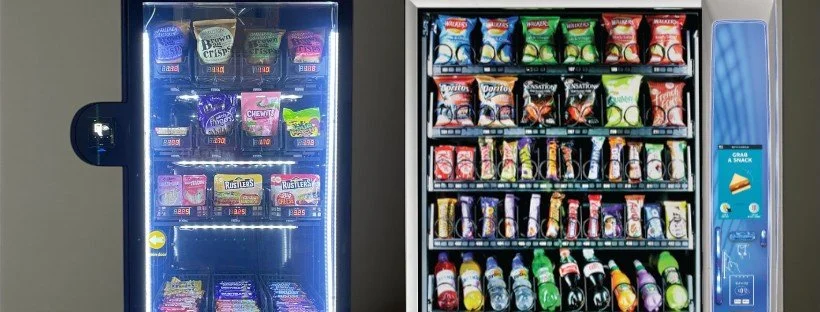
Smart Fridge vs Traditional Vending Machine
Smart Fridge vs Traditional Vending Machine – Which Is Better?
A Practical Comparison for Workplaces, Holiday Parks, Gyms & Commercial Sites
If you’re considering upgrading your on-site retail or refreshment provision, you’re likely weighing up two main options:
A traditional vending machine
A modern smart fridge solution
Both provide unattended retail. But they operate very differently — and suit different environments.
This guide breaks down the real-world differences to help you decide what’s right for your site.
What Is a Traditional Vending Machine?
Traditional vending machines dispense products mechanically using spirals or push mechanisms.
Customers:
Select a product number
Insert payment
Wait for the item to drop into the collection tray
They are ideal for:
Packaged snacks
Canned or bottled drinks
Long shelf-life items
They are simple, familiar, and widely used across workplaces and public buildings.
What Is a Smart Fridge?
A smart fridge is a self-service retail unit that:
Unlocks when a contactless payment method is presented
Allows customers to physically select products from shelves
Uses integrated sensors to track what is removed
Charges automatically when the door is closed
This creates a more natural shopping experience and allows a much broader product range.
Learn more about our Grab&Go Smart Fridges here.
Key Differences at a Glance
Product Flexibility
Smart Fridge
Can sell fresh food
Can sell frozen food
Can sell glass bottles
Can sell irregular shapes
Can sell by weight
Traditional Vending
Limited to packaged products
Restricted by spiral size
Cannot easily sell fresh meals
Cannot sell frozen food (unless separate frozen vending)
Winner: Smart Fridge for range and flexibility.
Customer Experience
Smart Fridge
Feels like a small shop
Customers can pick up items and read labels
No risk of products getting stuck
Faster for multiple purchases
Traditional Vending
Button-based selection
Product drops mechanically
Risk of jams
Less browsing ability
Winner: Smart Fridge for user experience.
Ideal Product Types
Smart Fridge
✔ Fresh meals
✔ Frozen meals
✔ Snacks & confectionery
✔ Bottled drinks
✔ Glass bottles
✔ Essentials (milk, bread, eggs)
✔ Irregular shaped items
✔ Products sold by weight
Traditional Vending Machine
✔ Snacks & confectionery
✔ Canned drinks
✔ Bottled drinks
✔ Long shelf-life packaged items
✖ Fresh meals
✖ Frozen meals
✖ Glass bottles (limited)
✖ Essentials such as milk and bread
Space Requirements
Smart Fridge
Similar footprint to vending
No need for micro-market layout
Requires power and internet connection
Traditional Vending
Compact footprint
Requires power
No internet required (unless cashless)
Both are suitable for most commercial environments.
Staffing & Operation
Both systems are designed for unattended operation.
However:
Smart Fridge
Can operate as 24/7 retail extension
Supports self-fill or fully managed models
Allows advanced pricing promotions
Traditional Vending
Generally simpler product range
Well suited to snacks and drinks
Lower product complexity
Maintenance & Reliability
Smart Fridge
No spirals or mechanical drop systems
Fewer jam-related service calls
Remote monitoring capability
Traditional Vending
Mechanical components can jam
Moving parts require servicing
Well-established servicing models
Winner: Often Smart Fridge for reduced mechanical issues.
Revenue Potential
Smart fridges often enable:
Higher-value basket spend
Fresh and premium product sales
Multi-buy promotions
Meal deal structures
Traditional vending excels in:
High-volume snack & drink turnover
Simple impulse purchases
Revenue depends on site type and product strategy.
When Should You Choose a Smart Fridge?
Smart fridges are ideal if:
You want to sell fresh or frozen food
You want to extend retail hours
You want to create a modern retail feel
You need flexible product sizes
You want promotional pricing options
Common locations include:
Holiday parks
Gyms
Hospitals
Offices with long shifts
Farm shops
When Should You Choose Traditional Vending?
Traditional vending remains a strong choice if:
You primarily sell packaged snacks and drinks
You need a simple, lower-cost solution
Fresh or frozen food is not required
Space is limited
Simplicity is key
Can You Have Both?
Absolutely.
Many sites successfully combine:
A smart fridge for fresh food and premium options
A snack or cold drink vending machine for impulse purchases
This hybrid approach maximises product range and revenue.
Which Is Right for Your Site?
There’s no universal answer.
The right choice depends on:
Your customer demographic
Available space
Desired product range
Staffing model
Revenue goals
At H2O Vend, we assess each site individually to recommend the most suitable solution — whether that’s traditional vending, Grab&Go smart fridges, or a combination of both.
Ready to Explore the Right Option?
If you’re considering upgrading your vending provision in Norfolk, Cambridgeshire, Lincolnshire or surrounding areas, we’d be happy to provide a tailored recommendation.
👉 Arrange a site survey with us today.
Frequently Asked Questions
A smart fridge allows customers to unlock the door using contactless payment and physically select products from shelves, with payment processed automatically when the door is closed. A traditional vending machine dispenses products mechanically using spirals or drop mechanisms after a selection is made.
Yes. Smart fridges can sell fresh meals, chilled products and frozen food because items are picked from shelves rather than dispensed mechanically. Traditional vending machines are generally limited to packaged snacks and drinks.
Smart fridges often experience fewer mechanical issues because they do not use spirals or drop mechanisms. Traditional vending machines rely on moving parts which can occasionally cause products to become stuck.
Smart fridges are typically better suited to holiday parks and gyms where fresh food, frozen meals or higher-value products are required. Traditional vending machines are well suited to snack and drink-only environments.
Yes. Smart fridges require a stable internet connection for payment processing, stock monitoring and remote management. Traditional vending machines may operate without internet unless fitted with cashless systems.
Costs depend on the model and service structure. Smart fridges may have slightly higher rental costs but can offer increased product flexibility and revenue potential. Traditional vending machines are often a lower-cost option for simple snack and drink provision.
Yes. Many sites successfully combine a smart fridge for fresh or premium items with traditional vending machines for snacks and drinks to maximise product range and revenue.