You Tap. We Think About Everything Else.
The remarkable journey of a chocolate bar before it reaches your hand.
The man standing in front of the vending machine has a meeting in a couple of minutes.
He doesn't know this because he's counting. He knows because, like the rest of us, he's glanced at his watch, decided there's probably just enough time for something sweet, and wandered into the break room in search of a chocolate bar.
Without breaking stride, he taps his card against the reader.
The machine hums to itself and, somewhere inside, a spiral turns before releasing a KitKat into the collection tray with the familiar plastic thud that almost everybody instinctively recognises.
He grabs it, tears open the wrapper as he walks away and is gone before the machine has fallen silent again.
The whole thing takes perhaps ten seconds.
He never gives the machine—or the chocolate bar—another thought.
Which is probably just as well.
Because if he'd stopped to wonder how that particular KitKat found its way into that particular spiral on that particular Wednesday morning, he'd almost certainly have been late for his meeting.
Its journey didn't begin a few minutes earlier when somebody filled the machine.
It didn't begin yesterday when it arrived in the back of a service van.
In fact, by the time it landed in the collection tray, its story was almost over.
Ours had begun the previous Friday.
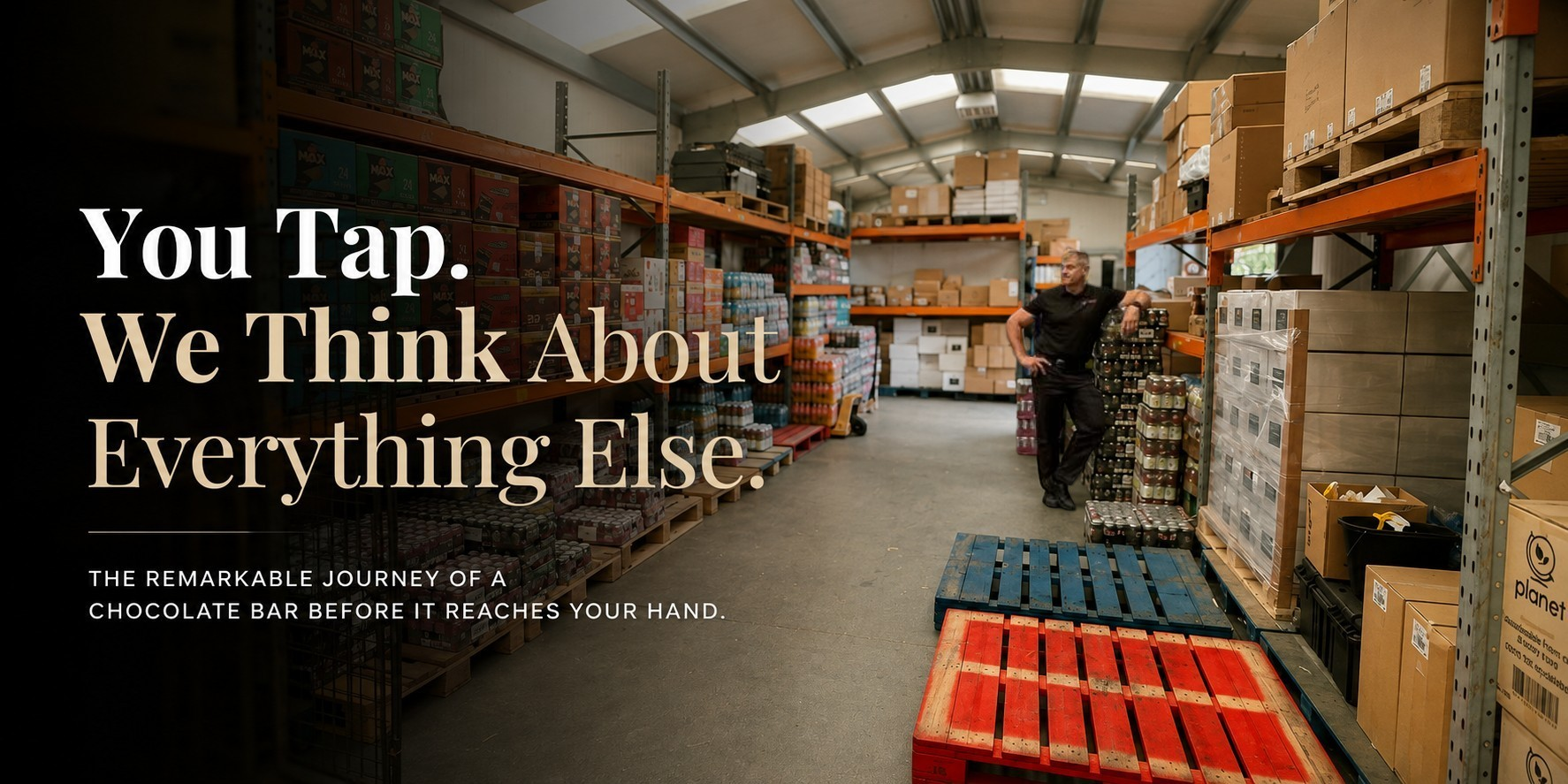
While most businesses are looking backwards by Friday afternoon, trying to finish the jobs they promised themselves they'd complete before the weekend arrived, the people at H2O Vend are already looking towards Tuesday.
The next delivery hasn't even arrived yet, but the order is already beginning to take shape.
Nobody gathers around a meeting table. There are no dramatic presentations or lengthy discussions. Someone notices bottled water disappearing a little faster than usual. Someone else remarks that flapjacks seem to be quietly replacing protein bars again. A few figures are checked. An order changes almost imperceptibly.
By the time everyone heads home for the weekend, decisions have already been made that will determine what somebody buys from a vending machine five days later...
...without ever knowing those decisions were made.
Forecasting makes it sound far more complicated than it really is.
In reality, it's mostly a matter of paying attention.
Noticing that the first warm spell of spring will empty bottled water far quicker than the last cold week in February. Realising that Christmas has a curious habit of persuading perfectly sensible adults that Turkey & Stuffing crisps are an entirely reasonable thing to eat, before quietly changing their minds sometime around the second week of January.
And then there are the products that simply... fade away.
Not because they've changed.
Because people have.
Around the warehouse they call it product fatigue.
One month everybody seems to want the latest chocolate bar. Three months later they walk straight past it as though it's fallen out of fashion overnight.
Nobody complains.
They simply stop buying it.
The warehouse notices long before anybody else does.
The next order quietly reflects it.
If Friday is about quiet decisions, Tuesday is something altogether different.
Just after nine o'clock an artic eases backwards onto the loading bay. To anyone driving past it's an entirely ordinary delivery. To everyone inside the warehouse, it's the moment the week really begins.
Over the next couple of hours, somewhere in the region of twelve-and-a-half thousand individual products will pass through the warehouse. Chocolate bars and crisps. Cold drinks and bottled water. Coffee beans, milk powder and sugar. Fresh sandwiches, wraps, frozen meals, water filters, cups, lids, stirrers and all the other things that keep hundreds of workplaces running without anybody giving them much thought.
By lunchtime, the pallets have disappeared.
Not because the stock has gone anywhere.
Because it has already started finding its way to where it was always intended to be.
If you're looking for Trevor Marshall, Tuesday morning is usually a good place to start.
While many managing directors are settling into meetings, Trevor is more likely to be somewhere between the back of the artic and the warehouse floor, checking deliveries, moving pallets, insisting that this counts as his gym membership for the week.
Judging by the end of the morning, he's probably right.
Ask him why he still insists on taking responsibility for the main delivery after all these years and he'll probably look faintly puzzled by the question, some things have simply always been his job.
And besides...
He likes Tuesdays.
Not because they're easy, but because they're honest.
A delivery either arrives or it doesn't.
The products are either right or they aren't.
There's something refreshingly uncomplicated about that.
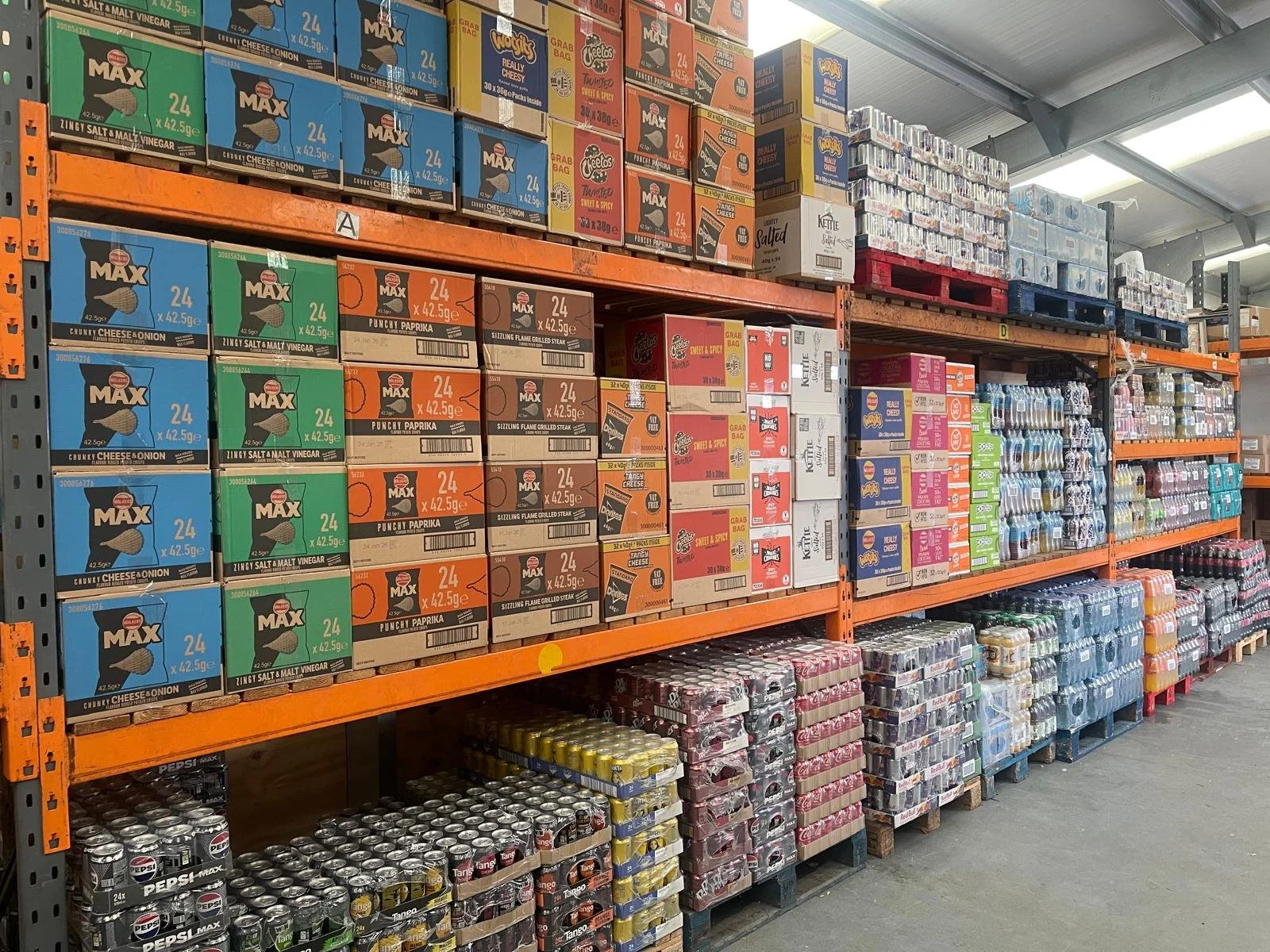
At some point during the morning, usually while leaning against a pallet of bottled drinks or watching another stack disappear into the warehouse, Trevor will almost certainly say something that sounds so ordinary you barely notice it.
"It's just a vehicle."
The first time I heard him say it, I assumed he meant the lorry, but he didn't. He was talking about the warehouse.
"It simply moves products from our suppliers to our customers."
Nothing more, nothing less.
That one sentence changes the way you look at the building, because once you've heard it, the warehouse stops looking like somewhere things are stored.
It starts looking like somewhere things pass through, a pallet of bottled drinks arrives from one direction just as trays of chilled burgers and sandwiches disappear in another.
An operator carries yesterday's coffee machine service kits towards the wash room while someone else loads tomorrow morning's route into the back of a van that won't leave the yard for another eighteen hours.
Outside, racks of bottled water sit beneath heavy protective curtains, stacked neatly against the East Anglian weather, waiting for their turn.
Inside, chocolate disappears into a chilled room where summer never quite arrives.
Coffee beans line up beside milk powder, hot chocolate and sugar.
Nothing looks hurried, but nothing stands still. The longer you watch, the more difficult it becomes to work out where one day ends and the next begins.
Tomorrow's deliveries are already being picked while today's lorry is still being unloaded. Fresh food is arriving while empty water bottles are returning.
Coffee machine parts are heading back towards ultrasonic cleaning baths before beginning another journey tomorrow.
Everything overlaps. Everything moves… Whenever you walk into the warehouse you're only looking at a snapshot of something that never stops.
Trevor has another expression you'll hear often enough if you spend a Tuesday morning following him around.
He'll stop beside a pallet, rest a hand on the top case and say, almost to himself,
"Stock sat on shelves is dead money."
Again, it sounds harsher than he intends.
He's not talking about the value of the products, he's talking about their purpose, as a chocolate bar sitting on a warehouse shelf isn't doing what it was made to do.
Neither is a bottle of water, or a bag of coffee beans.
They're waiting.
The warehouse exists to make sure they don't wait for very long.
After a while you begin to notice something rather unexpected.
Nobody seems particularly interested in filling the warehouse.
If you've never worked in logistics, it's easy to imagine success as shelves groaning under the weight of stock. More products must surely mean better planning.
Trevor doesn't see it that way.
He stops beside a run of racking that, to me, looks surprisingly empty.
"Good," he says.
For a moment, I assume he's joking.
Then it dawns on me.
Those empty spaces aren't gaps at all. They're evidence. Somewhere, those products are already doing the job they were bought to do. They're sitting in staff rooms, factory canteens and hospital break rooms instead of quietly ageing on warehouse shelves.
"The warehouse isn't judged by how much it holds - It's judged by how much it lets go."
By Tuesday afternoon the building has changed character again. The delivery has disappeared into the racking and tomorrow has begun to take shape. Pick lists begin printing in the office before finding their way onto the operators' handhelds, ready for routes that will start long before sunrise.
Nobody rushes.
Nobody needs to.
Everyone already seems to know where tomorrow begins.
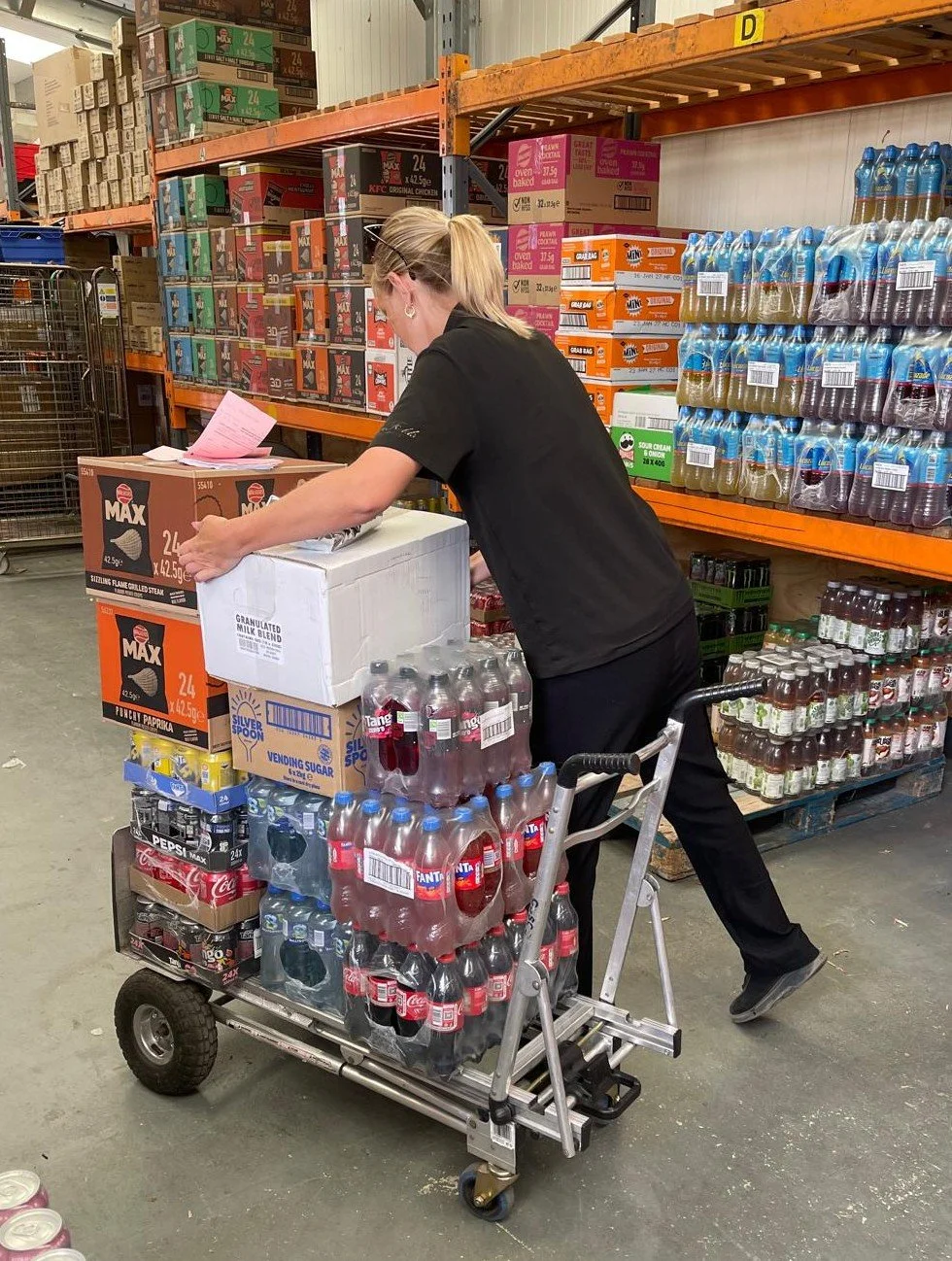
One operator is already loading tomorrow's van.
She moves between the shelves and the pick list on her handheld, lifting cases almost without thinking. Every product has its place. Coffee here. Cold drinks there. Chocolate within easy reach.
As she reaches for another case, she pauses for a moment before lifting one more onto the trolley.
"The nearest case... plus one."
Nobody asks why.
They already know.
Tomorrow has a habit of refusing to behave exactly like today.
A warm afternoon can empty a cold drinks machine before lunch.
The extra case isn't there because somebody miscounted, experience has taught everyone in the warehouse that certainty is a wonderful thing... right up until real life arrives.
By Wednesday morning, much of Tuesday's delivery has already vanished.
The towering stacks of cartons that filled the warehouse less than twenty-four hours earlier have dissolved into hundreds of smaller journeys, each heading towards a different customer somewhere across East Anglia. Nothing dramatic has happened. Nobody has noticed. The warehouse has simply kept moving.
Our chocolate bar doesn't wait for long either.
For now, it sits in the chilled room among hundreds of others. Not because chocolate particularly enjoys the cold, but because August has an unfortunate habit of turning perfectly respectable confectionery into modern art.
Open the insulated door and the temperature drops instantly. Shelf after shelf of chocolate waits its turn before another cool box disappears back into the warehouse.
Because even this room isn't really storage.
It's simply another point in the current.
Nothing comes here intending to stay.
Coffee behaves differently.
It doesn't arrive looking anything like coffee.
Instead it turns up disguised as foil bags of beans, bags of milk powder, chocolate, sugar, plus cups, lids, stirrers and enough replacement parts to make you realise a bean-to-cup machine is considerably more complicated than most of us ever imagine.
At one end of the warehouse an engineer drops off a bag of used parts collected during the morning.
Mixing bowls.
Whippers.
Dispense pipes.
Filters.
None of them are broken.
They're simply dirty.
An hour later they've disappeared into the wash room where industrial dishwashers and ultrasonic cleaning baths quietly prepare them for another journey.
It would be perfectly possible to clean each component on site.
It would also mean customers standing around waiting while engineers scrubbed coffee residue from parts that can be exchanged in seconds.
So the dirty parts come home instead and the clean ones go back out.
The customer notices none of it, they simply notice the coffee.
Fresh food plays by different rules.
Chocolate will happily wait its turn.
Sandwiches won't.
An operator opens the machine and studies the shelves for a moment before reaching for three sandwiches.
"These are coming with me."
Nothing more is said.
The sandwiches disappear into the cool box, three fresh ones take their place.
By tomorrow lunchtime they'll almost certainly be twenty miles away in a busy distribution centre instead of the quieter office where they've spent the last couple of days.
Nobody notices.
"Machines aren't simply filled. They're managed."
The warehouse hasn't sold a single thing.
It never does.
Its job is simply to keep the current moving; nudging thousands of tiny decisions gently in the right direction until, somewhere later in the day, somebody taps a card and buys a chocolate bar without giving any of it a second thought.
Stand in the yard for half an hour as the vans return and another pattern begins to reveal itself.
No two are loaded quite the same way.
Most belong to one regular operator who's refined their own system over years of doing the job. Coffee lives in one place. Chocolate somewhere else. Cold drinks where they can be reached without climbing over everything else. Another operator would almost certainly arrange the shelves differently, but that's beside the point.
The system only has to make sense to the person who'll be standing in the back of that van at half past four tomorrow morning.
What's more interesting is what happens when the day is over.
The van is emptied. Empty cartons are flattened. Stock is replenished. Ingredients are replaced. Clean machine parts go back into their kits while the used ones head for the dishwasher and ultrasonic bath, ready to begin the whole cycle again.
By the time the shutters come down, tomorrow is already waiting.
The shared vans tell an even quieter story.
Two part-time operators may never work together, yet they work with each other every day.
One leaves the van exactly as they'd hope to find it themselves. Stock replenished. Shelves tidy. Coffee topped up. Cold drinks counted. Nothing left for the next person to sort out at four o'clock in the morning.
It's such a small act that most people would never notice it.
Trevor notices it.
Years ago he gave the team a piece of advice they've never really forgotten.
"Do the right thing for the person that follows you in... because one day it may be you."
Wandering around the warehouse, watching products arrive, disappear, return and leave again, a question comes to mind.
"What does the warehouse actually store?"
Trevor answers in his usual direct tone.
"Not much."
For a second, I thought he was joking.
We were standing in the middle of more than two hundred and fifty product lines. Pallets of drinks disappeared into one aisle while coffee beans waited patiently in another. Chocolate filled an entire chilled room, bottled water sat stacked outside under cover and somewhere behind us another operator was already picking tomorrow morning's route.
It didn't look like a warehouse that stored not much.
Trevor smiled.
"It's just a vehicle."
That was it.
No long explanation.
No grand philosophy.
Just four words.
And, somehow, they explained everything.
The warehouse wasn't there to keep hold of products.
It was there to let them go.
By late afternoon, the warehouse has already begun preparing for tomorrow, although nobody ever seems to announce the moment it happens.
One van returns while another is still out on the road. Empty trays replace the full ones that left before dawn. Coffee machine parts come back carrying the evidence of another day's service before disappearing into the wash room, while clean replacements are ready for the next engineer. Tomorrow's pick lists appear on handhelds. Stock is counted, shelves replenished, and somewhere a glance towards the bottled water is enough to tell someone that next week's order will need to be a little larger after all.
The remarkable thing is that nobody appears to be directing any of it.
The warehouse simply adjusts.
Like water finding its own level, the work drifts naturally to wherever it's needed. A route changes here. An extra case is added there. An engineer lends a hand loading a van before heading home. Nobody calls a meeting. Nobody stops to discuss it.
Tomorrow has simply arrived.
The longer you spend here, the more you realise there probably isn't a moment when the warehouse ever truly stops. The shutter doors eventually come down and the lights go out, but another pallet has already been ordered. Tomorrow's routes have already been planned. Somewhere an operator has set an alarm for an hour when most people are still asleep.
And somewhere else, without giving any of it a second thought, somebody has already decided they'll probably fancy a coffee at about ten o'clock tomorrow morning.
The warehouse is simply making sure it'll be there.
A lady wanders into the break room, still reading something on her phone as she walks.
Without breaking stride she taps it against the reader, opens the fridge, takes a flapjack from the basket and closes the door again.
Ten seconds, perhaps.
By the time she's halfway back to her desk, she's already unwrapping it.
She'll probably never know that somebody first ordered that flapjack the previous Friday afternoon, or that it arrived with twelve thousand other products on the back of an artic before Trevor wrestled it into the warehouse on Tuesday morning. She won't picture the operator who loaded it into a van before dawn, or the countless small decisions that nudged it from supplier to warehouse, from warehouse to service van, and finally into the basket she'd reached for without a second thought.
She doesn't need to.
Somewhere between placing the order on Friday afternoon and dropping the wrapper into the bin, hundreds of small decisions have quietly taken place without demanding recognition from anybody.
No fanfare.
No applause.
Just people doing what they've always done.
Keeping things moving.
It's the end of the day.
Trevor pulls the warehouse door towards him before pausing for one last look inside.
Shelves that looked full only yesterday now have spaces appearing between the cases. By this time next week they'll be full again, only to empty once more a few days later. Watching it over the course of a week, the building seems to breathe.
He smiles.
"It's never really finished."
Then the shutter begins its slow journey to the floor.
Tomorrow morning, before most people have reached for their first cup of coffee, another artic will be reversing onto the yard. Another operator will be loading a van. Somewhere, another customer will be wondering whether there's time for a quick coffee before the morning meeting.
And at some point, without giving it a second thought, somebody will tap their phone against a vending machine and pick up a chocolate bar.
The warehouse will already have done the rest.